By Sadie | Professional Chef (20+ Years Experience)
Over the past twenty years, I’ve stood in kitchens so hot that the stainless steel felt like a radiator and the air tasted like fire and butter. I’ve worked dinner services where we plated 200–300 covers back-to-back without a pause. And people always ask me the same thing:
“How do chefs stay calm when everything around them is chaos?”
Here’s the truth…
It isn’t natural talent.
It isn’t superhuman speed.
It isn’t adrenaline.
It’s something far more disciplined:
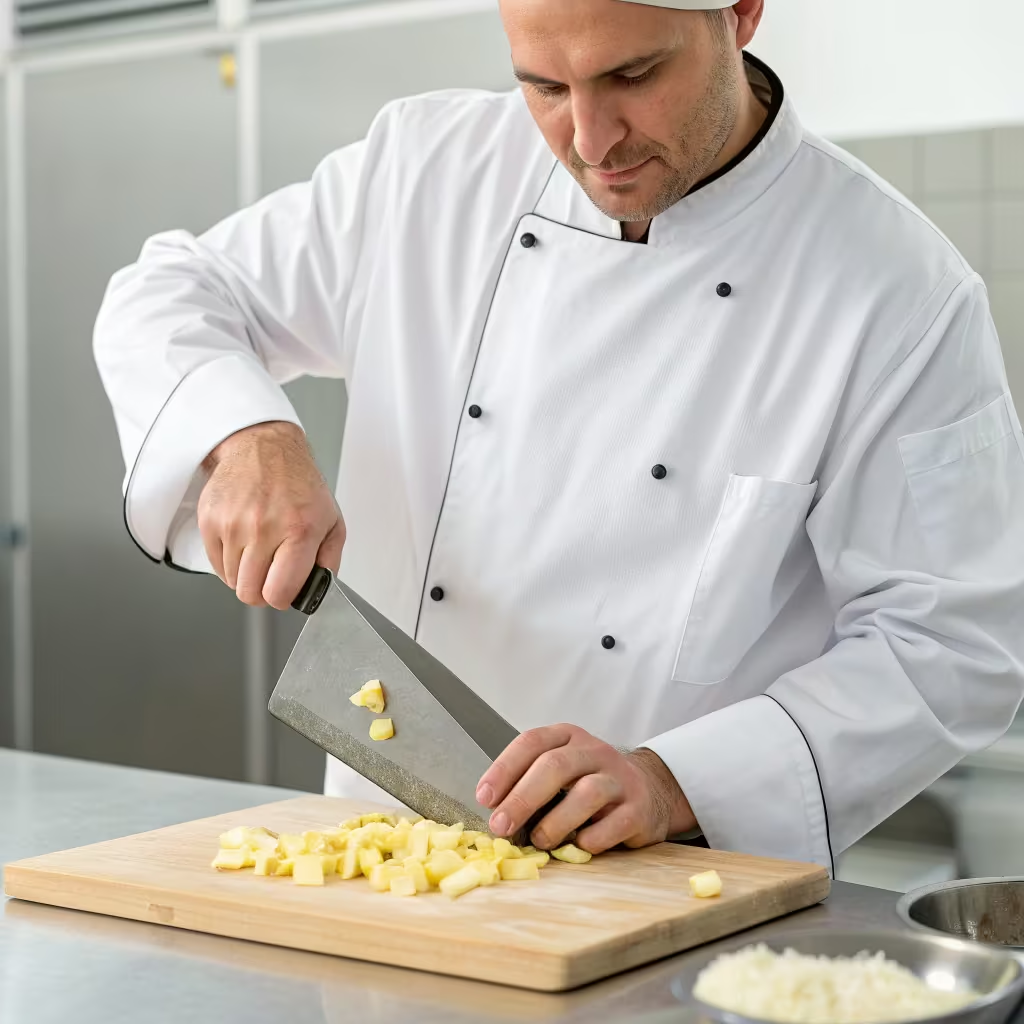
How to Run Your Home Kitchen : Mise en Place
(pronounced: meez-on-plahss)
Yes—it’s French. Yes—it sounds fancy. But in the culinary world, Mise en Place is more than a phrase. Chefs call it our religion, and we mean that quite seriously.
It literally translates to:
“Everything in its place.”
But to a professional chef?
It means control, predictability, and confidence.
If you’ve ever:
• burned garlic while still peeling onions
• realized you’re missing eggs halfway through cake batter
• opened the fridge during cooking and completely lost rhythm
• ended with a sink full of dishes that ruin your mood
Then you need Mise en Place in your life.
And trust me… once you learn it, you’ll never cook the old way again.
1️⃣How to Run Your Home Kitchen ; The Psychology of the “Clean Board”
Before we talk knives, bowls, or timers… we need to talk about something more important:
your brain.
Because cooking isn’t just physical—it’s mental. A cluttered counter creates a cluttered mind. When you’re already juggling timing, temperature, seasoning, and safety… visual chaos makes everything worse.
Chef Sadie’s Golden Rule
Your cutting board is your “office.”
Only the current ingredient belongs there. Nothing else.
You’ll instantly feel calmer.
How to Run Your Home Kitchen : cooking preparation checklist printable
✔️ Cooking Preparation Checklist
Before You Start
- Read the recipe fully
- Wash hands
- Clear and clean workspace
- Gather equipment
Ingredients
- Gather all ingredients
- Measure everything
- Prep vegetables
- Prep protein
- Preheat oven/stove
During Cooking
- Follow timing
- Taste as you go
- Adjust seasoning
Finishing
- Plate nicely
- Garnish
- Serve hot
Print and reuse anytime! Happy cooking!
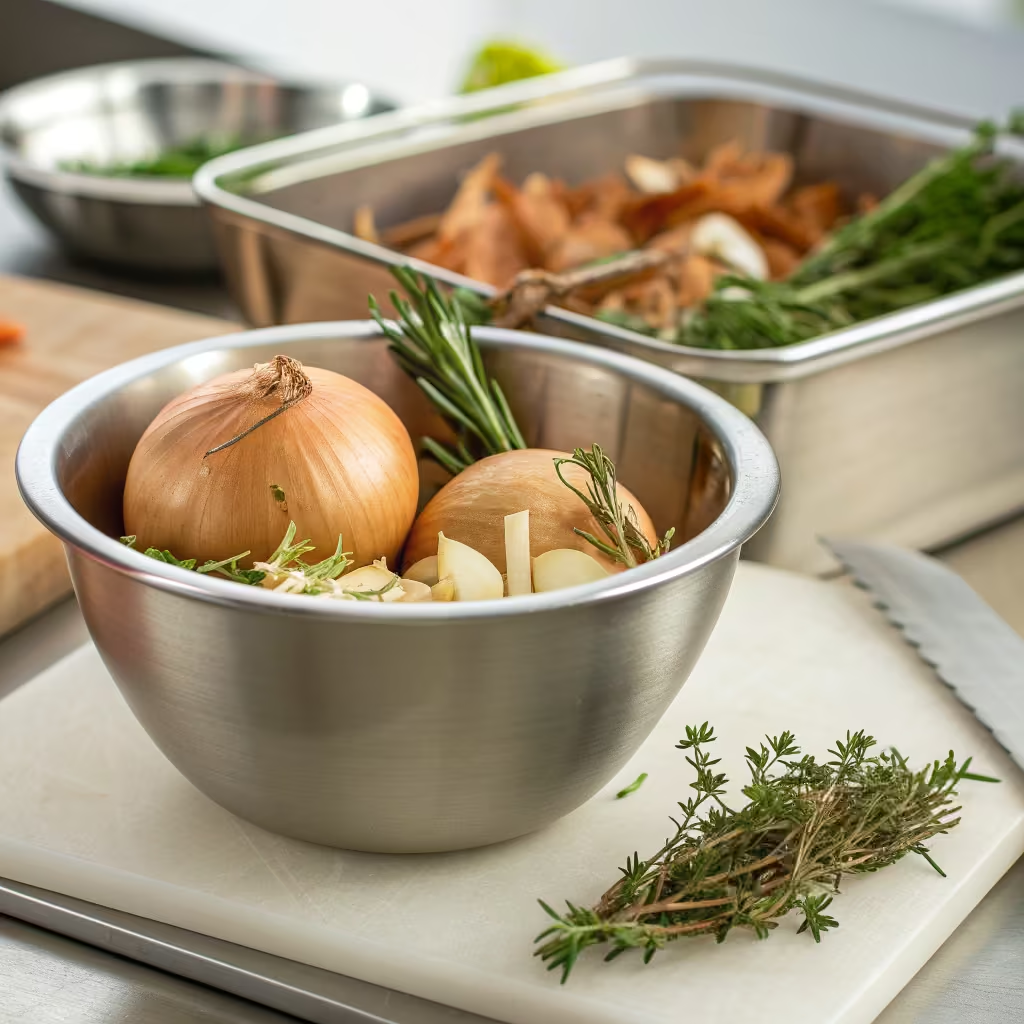
✔️ The “Waste Bowl” System
Here is a trick that will change your life in the kitchen.
Instead of walking back and forth to the trash can with peels and scraps…
Place a large bowl at the top corner of your cutting board (I keep mine to the right).
Anything you trim:
• onion skins
• carrot tops
• garlic peels
• herb stems
Goes straight into that bowl. Then one single trip to the bin at the end. Cleaner workspace. Less fatigue. You’ll save at least 10–15 minutes per meal.
I’ve worked in Michelin kitchens where skipping this step is considered a sin.
✔️ The Damp Cloth Trick
Every professional kitchen does this—and hardly any home cooks do.
Slip a damp kitchen towel or paper towel under your cutting board.
It prevents slipping.
It protects your fingers.
It stabilizes your workspace.
It’s a safety rule we enforce in restaurants—and it makes you feel instantly more professional.
2️⃣ The Four Stages of Professional Prep
(The Exact System Chefs Live By)
Most home cooking stress comes from one thing:
Starting too soon.
Professional chefs never just “start chopping and hope for the best.” There’s a sequence we follow religiously, because it prevents panic later.
Stage A — The Mental Audit
Before I touch a knife, I read the entire recipe. Then I read it again—from bottom to top.
Yes, from bottom to top.
Because that’s where the important surprises hide, like:
• “let rest 20 minutes”
• “must marinate for 2 hours”
• “serve immediately”
• “preheat oven to 200°C”
You don’t want to discover those instructions halfway through.
Then ask yourself:
• Does something need time to marinate?
• Does something need to be softened?
• Does water need to boil?
• Does the oven need preheating?
Start those things first.
This is why line cooks always look weirdly calm—they knew what was coming before it arrived.
Stage B — The Gathering
Now we assemble everything.
Every. Single. Thing.
All ingredients.
All tools.
All pots and pans.
Cutting boards.
Spoons.
Spices.
Measuring cups.
Put them on the counter. If I have to open a drawer once the stove is on? I consider that a mise en place failure.
Chef Secret:
Open jars, peel back seals, crack lids now.
There is nothing more stressful than trying to fight a stubborn soy sauce bottle while something is burning in the pan.
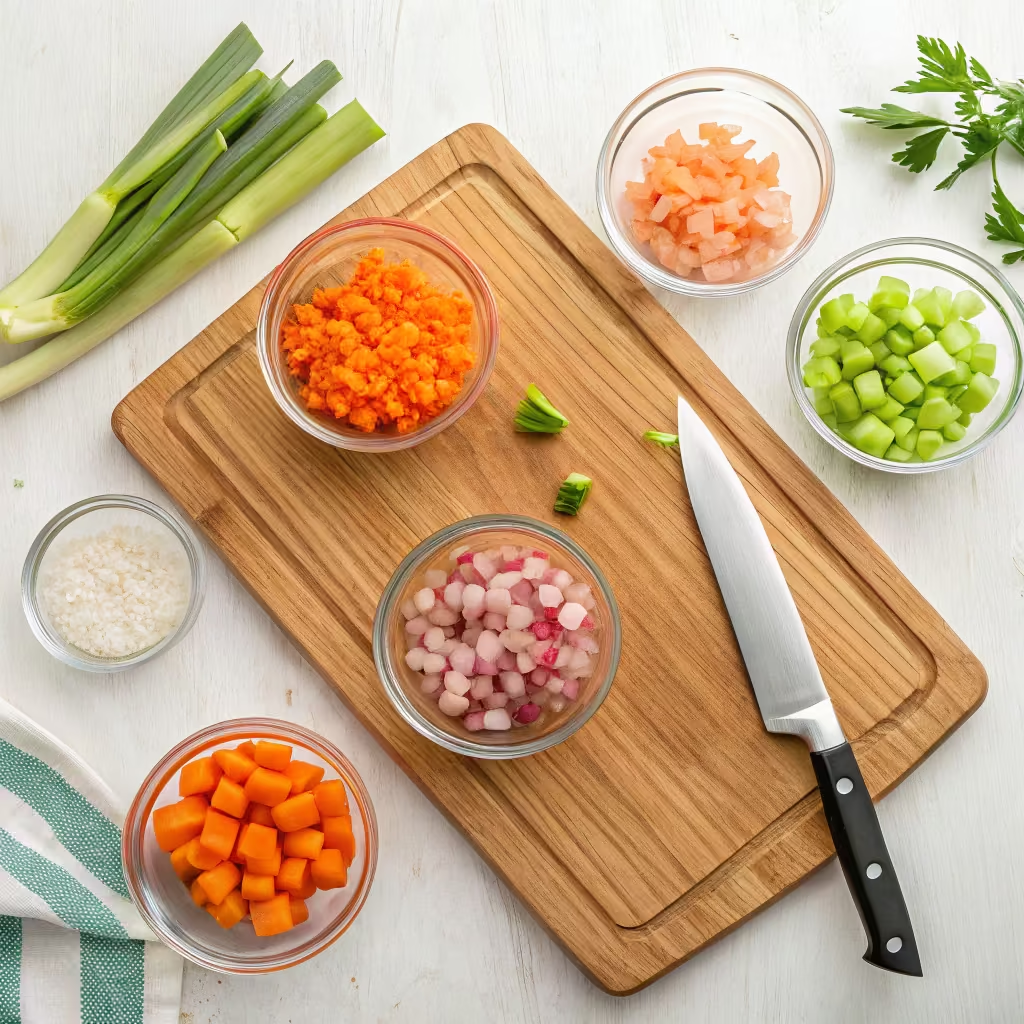
Stage C — The Processing (a.k.a. “The Chop”)
Now we prep.
All knife work happens at once. Not while cooking.
This is where efficiency kicks in.
Group ingredients by when they go in:
• onions + garlic + carrots (same time → same bowl)
• herbs separate (added last)
• proteins prepared and seasoned ahead
This doesn’t just save dishes.
It prevents emotional chaos.
When the pan is hot, you simply grab and drop.
Cooking becomes smooth instead of frantic.
Stage D — The Clean Down
In restaurants, we say:
“If you have time to lean, you have time to clean.”
Once everything is chopped:
• wash the board
• empty the waste bowl
• wipe the counter
• reset your work area
By the time you start cooking, your kitchen should already look like you’ve finished.
I promise—your entire cooking experience will feel calmer, cleaner, and more joyful.
✔️ Smart Kitchen Setup Guide
Cooking Zone
- Pots & pans within reach
- Spatulas, ladles, tongs nearby
- Heat-safe tools close to stove
Prep Zone
- Cutting boards
- Sharp knives
- Mixing bowls
- Measuring cups & spoons
Pantry Essentials
- Salt, pepper, spices
- Oil & vinegar
- Rice, pasta, beans
- Flour & sugar
Cleaning Station
- Dish soap
- Sponges
- Trash bin
- Towels
Print and place inside your kitchen cabinet door!
3️⃣ The Tools of the Trade
(You Don’t Need Fancy Gadgets—Just Smart Ones)
People think chefs have thousands of tools. Truthfully?
We use the same few items every day.
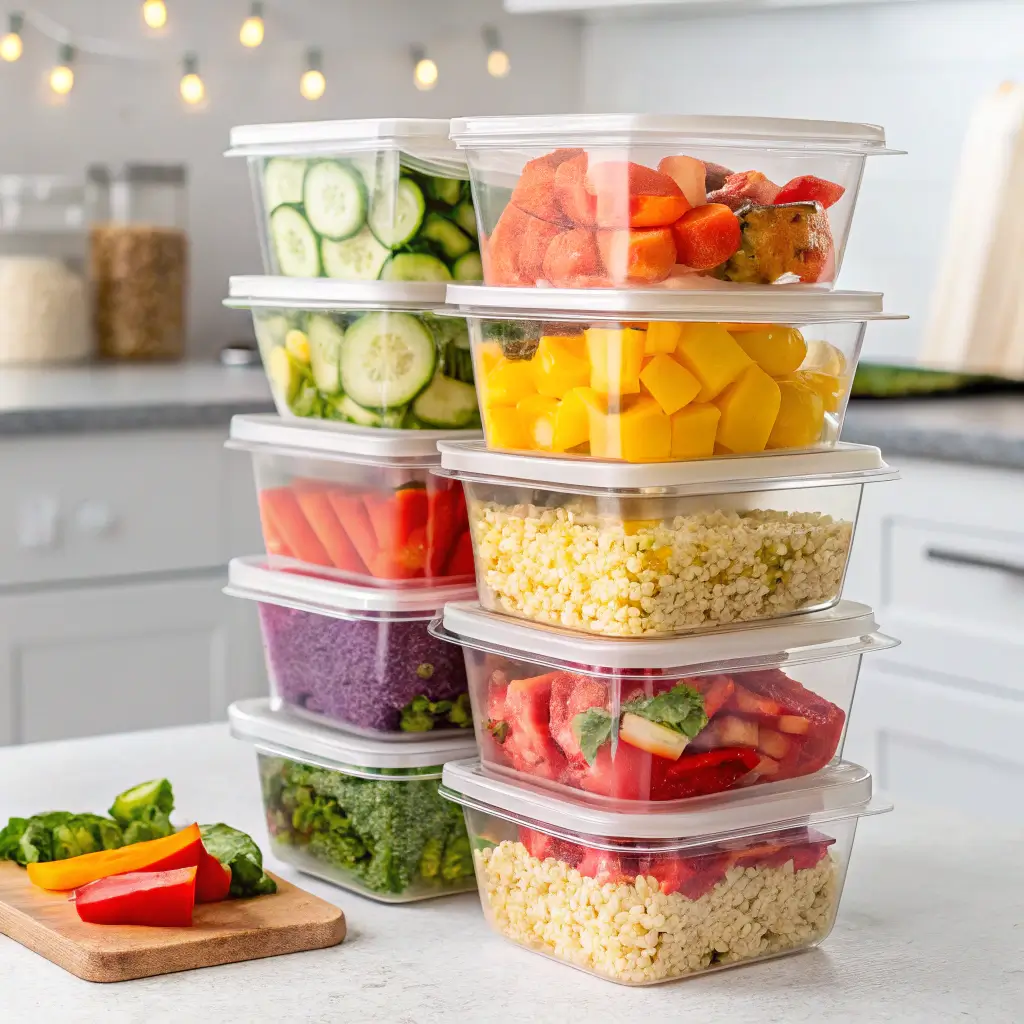
✔️ Deli Containers
Restaurants live on these. They’re cheap, stackable, transparent, and last forever.
Perfect for:
• chopped onions
• sauces
• leftovers
• marinating
Once you use them, you’ll understand why every pro kitchen swears by them.
✔️ Stainless Steel Mixing Bowls
Glass looks pretty. Steel works better.
They:
• don’t retain smells
• are light but tough
• can go over boiling water if needed
They’re the unsung heroes of prep.
✔️ Bench Scraper
This little tool is magic.
Use it to:
• scoop chopped vegetables
• transfer ingredients
• keep your board clean
And please… don’t scrape your knife blade across the board. That destroys sharpness. Your knife will thank you.
4️⃣ “But My Kitchen Is Too Small!”
Here’s the Reality…
Most home kitchens are tiny compared to restaurants. That’s okay.
Use the Vertical Mise method:
Place all prepped bowls and ingredients onto a baking sheet.
Now your entire recipe is mobile.
You can slide it near the stove… then slide it away.
Clean. Organized. Efficient.
LEARN MORE
- Making Cooking Substitutions: Become a Kitchen Pro
- Brisket recipe : Cooking Methods, Secrets to Perfect Brisket
- Skirt Steak: History, Cooking Tips, Recipes, and More
- Do You Put Barbecue Sauce on Pulled Pork Before or After Cooking?
Chef Sadie’s Quick Comparison Guide
| Habit | The Amateur Way | The Professional Way |
|---|---|---|
| Preparation | Chop while cooking | Finish chopping before heat is on |
| Trash | Walk back and forth | One “Waste Bowl” |
| Cleaning | Pile of dishes at end | Clean continuously |
| Ingredients | Panic search mid-cook | Everything measured + staged |
| Mindset | Stress + rushing | Calm, confident control |
✔️ Mise en Place System
| Level | What To Do | Goal |
|---|---|---|
| Beginner | • Read recipe • Gather ingredients • Measure ingredients • Basic chopping | Stay organized & reduce stress |
| Intermediate | • Label ingredients • Group by steps • Preheat equipment • Prepare garnishes | Cook smoother & faster |
| Advanced | • Time management planning • Multi-dish coordination • Efficiency workflow • Restaurant-style readiness | Cook like a professional |
Print and keep near your cooking area to stay efficient and confident.
Final Thoughts From Me to You
I’ve been in kitchens where chaos should have taken over—but didn’t. Not because we were superhuman…
…but because everything was already prepared, organized, and thought through.
When you master Mise en Place:
• meals taste better
• cooking feels easier
• your kitchen stays cleaner
• and you actually enjoy the process
It’s the difference between cooking feeling like a stressful chore…
…and cooking feeling like something empowering.