Learn how to make flaky homemade pie crust with just flour, butter and ice water. Step-by-step guide, tips, freezing advice and troubleshooting.
Why This Homemade Pie Crust Recipe Belongs in Every Kitchen
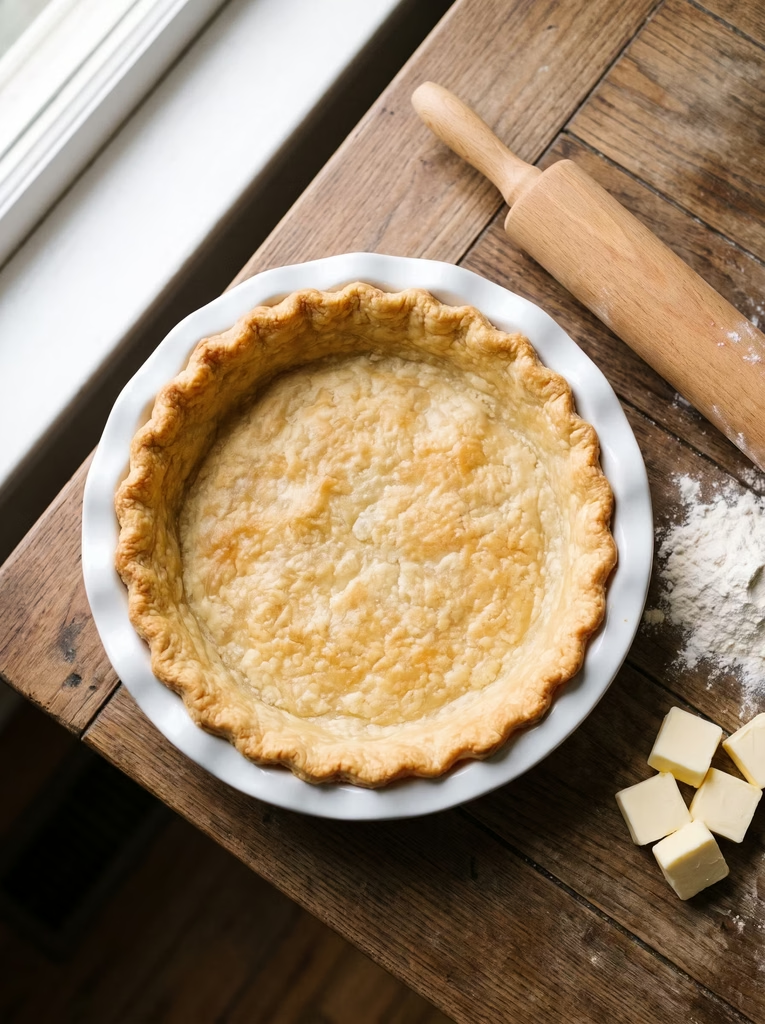
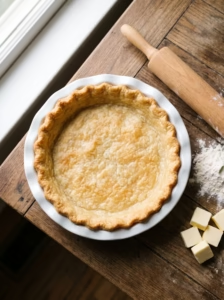
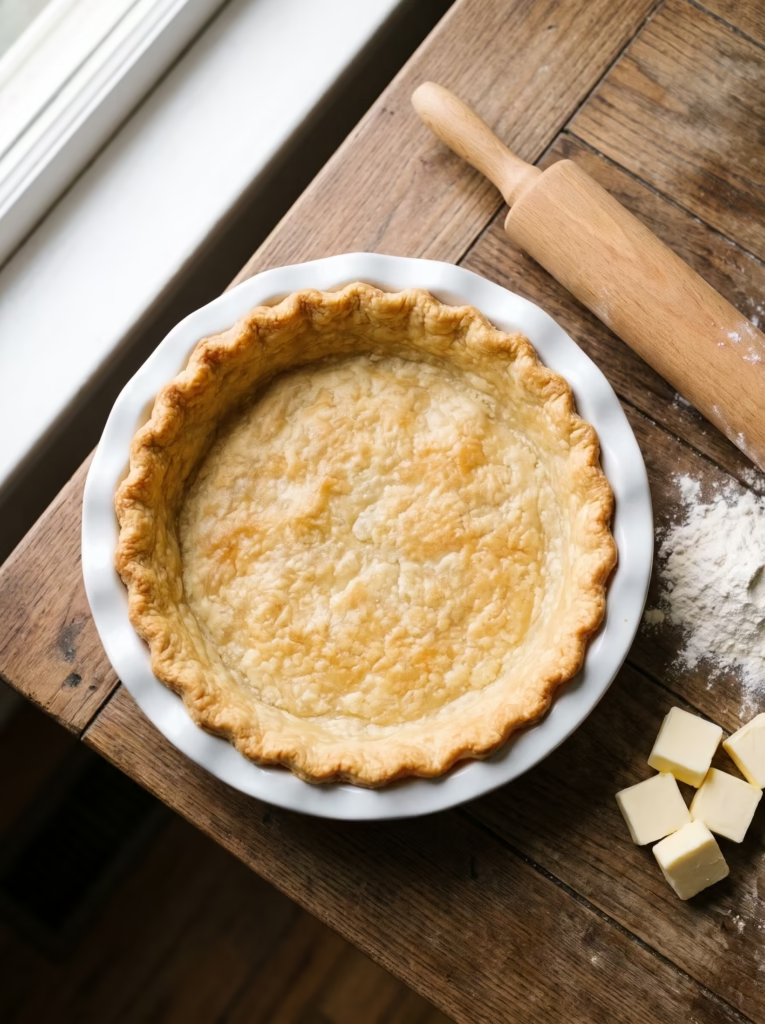
If you have ever wondered how to make pie crust that is crisp, golden and truly flaky, you are in the right place. This homemade pie crust recipe uses just three core ingredients, flour, cold butter and ice water, plus a little salt, and it takes about 15 minutes of hands-on time. There is no shortening, no special equipment beyond a food processor, and no complicated technique.
This is also the foundation page for all of our pie recipes. Whether you are baking an apple pie, a pecan pie, a berry pie or a savory chicken pot pie, you can start here, make the crust once, and then follow the link to your favorite filling.
Why Make Homemade Pie Crust From Scratch?
Store-bought crusts are convenient, but a homemade all butter pie crust wins in several ways:
- Better flavor. Real butter gives a rich, slightly savory taste that complements both sweet and savory fillings.
- Better texture. Small pieces of cold butter melt as the crust bakes, creating the thin, flaky layers everyone loves.
- Better value. Flour and butter cost far less than premium ready-made crusts.
- Total control. You decide the thickness, the size and the ingredients.
- Make-ahead friendly. The dough keeps in the fridge or freezer, so holiday baking becomes much less stressful.
Ingredients for a Double Pie Crust
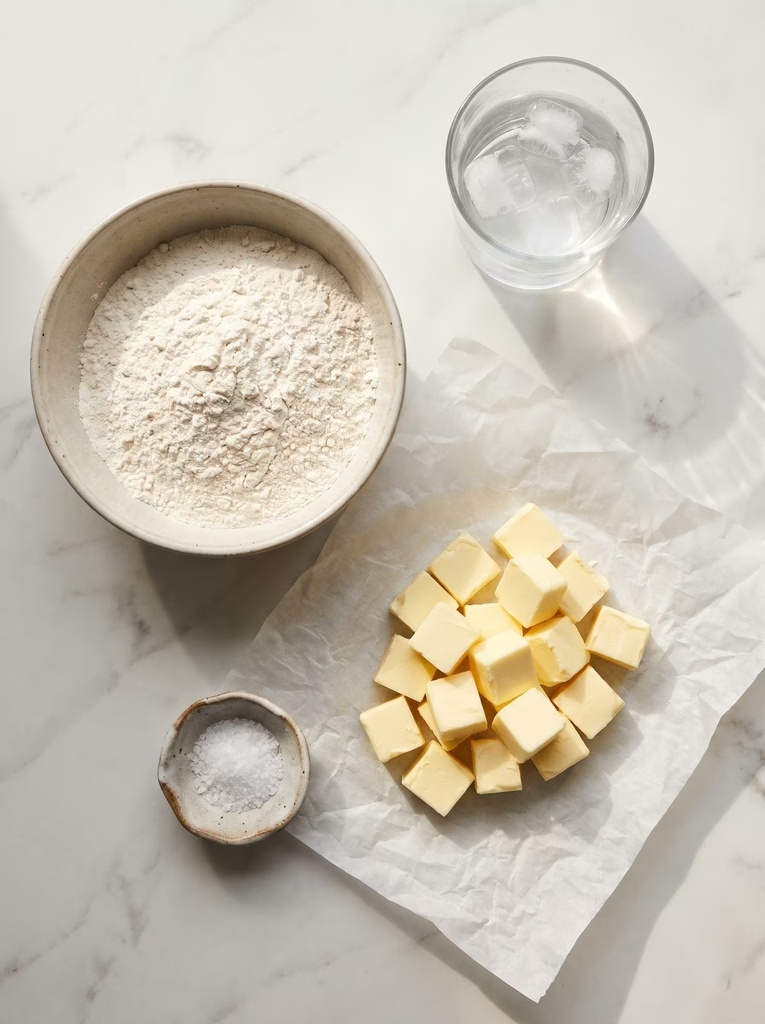
This recipe makes two 9-inch crusts, enough for one double-crust pie (top and bottom) or two single-crust pies.
| Ingredient | Amount |
|---|---|
| Cold unsalted butter, cut into tiny cubes | 1 cup |
| All-purpose flour | 2 1/2 cups |
| Salt | 1 teaspoon |
| Ice water | 7 tablespoons |
Prep time: 15 minutes Chilling time: at least 3 hours, or overnight Yield: 2 crusts (9 inches)
Need just one crust? Simply cut every ingredient in half.
Ingredient Notes That Make a Difference
Butter. Use unsalted butter so you control the saltiness, and keep it very cold until the moment it goes into the bowl. Cut it into small cubes and, if your kitchen is warm, pop the cubes in the freezer for 10 minutes first.
Flour. Plain all-purpose flour is all you need. Measure it by spooning it into the cup and leveling it off, rather than scooping directly from the bag, which packs in too much flour and makes the dough dry.
Ice water. Water straight from the tap is too warm. Fill a cup with water and ice cubes, and measure from the liquid only. Cold water keeps the butter solid, and solid butter is the secret to flakiness.
Salt. Salt balances the butter and brings out the flavor of the filling. Do not skip it, even in dessert pies.
How to Make Pie Crust Step by Step
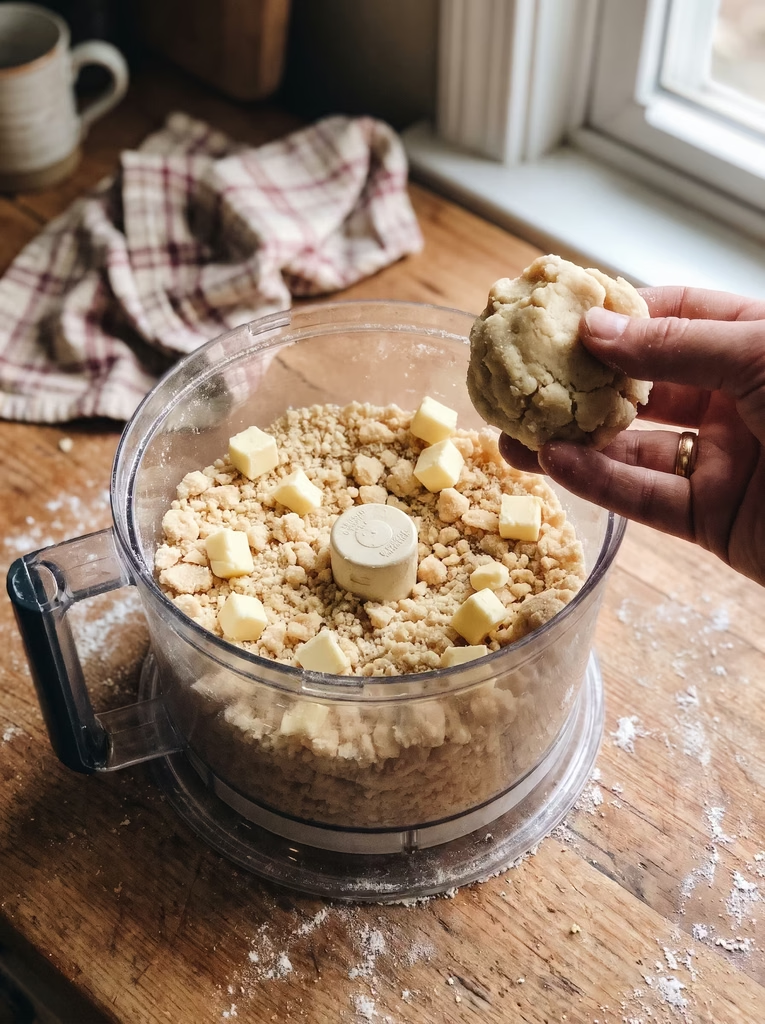
Step 1: Combine the Dry Ingredients
Add the flour and salt to a food processor and pulse for a few seconds until well combined.
Step 2: Add the Butter
Scatter the cold butter cubes over the flour and pulse until the mixture looks like larger crumbs. A few pea-sized pieces of butter are perfectly fine. In fact, they are what create those flaky layers.
Step 3: Add the Ice Water Gradually
Add the water one tablespoon at a time, pulsing for a few seconds after each addition. Keep going until the mixture comes together into a ball of dough. Stop as soon as it does. Over-processing makes the crust tough.
Step 4: Divide, Flatten and Wrap
Remove the dough, split it into two equal portions, and flatten each into a disc with your hands. Wrap each disc tightly in plastic wrap.
Step 5: Chill the Dough
Refrigerate for a minimum of 3 hours, or overnight. Chilling relaxes the gluten so the dough rolls out easily and does not shrink in the oven, and it re-firms the butter.
How to Roll Out and Shape Pie Dough
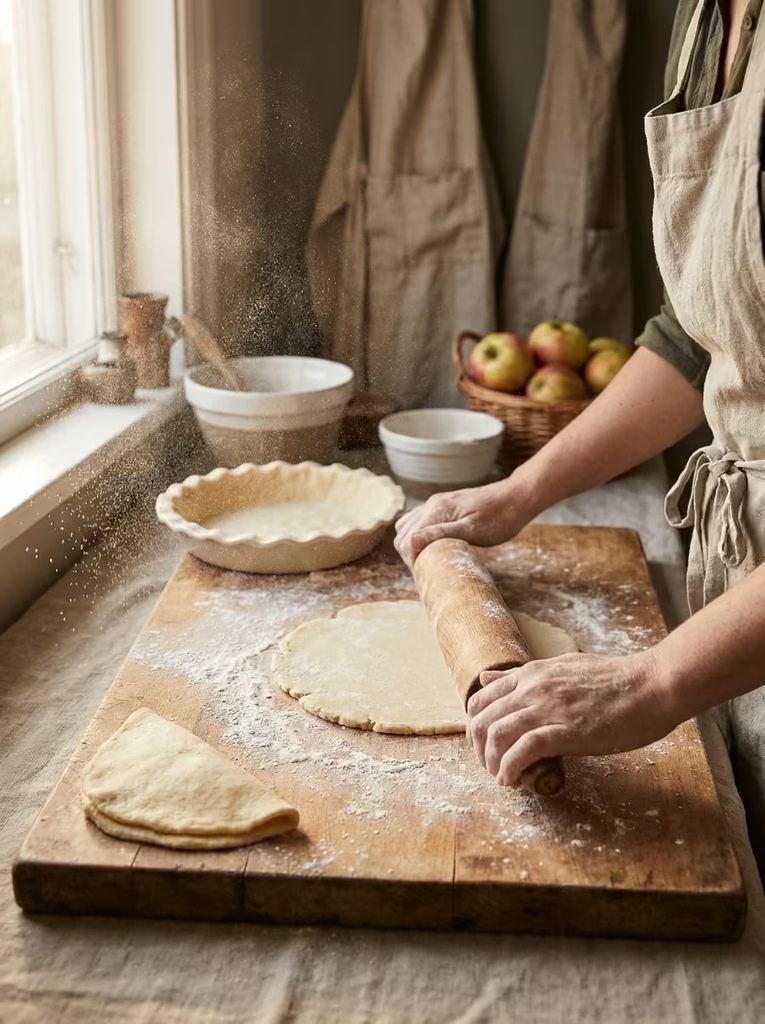
Rolling is where many beginners feel nervous, but a few simple habits make it easy.
- Flour your surface and your rolling pin. A light, even dusting prevents sticking.
- Roll and turn. After each roll, rotate the dough a quarter turn (counterclockwise works well) and roll again. This keeps the circle even.
- Patch if needed. If a section is too thin or has a gap, trim a bit of dough from an edge, press it into the gap and keep rolling.
- Roll bigger than your dish. The crust should be noticeably larger than your pie pan to leave room for the sides and the crimped edge.
- Transfer carefully. Trim the outer edge into a rough circle, fold the crust into quarters, place the point in the center of the dish and unfold.
- Press gently. Ease the dough into the bottom and sides without stretching it, because stretched dough shrinks while baking.
- Trim and crimp. Trim the overhang with a sharp knife, then crimp the edges with your fingers for a classic fluted finish.
Single Crust vs. Double Crust Pies
Knowing which pies need one crust and which need two helps you plan.
Single-crust pies use one crust in the dish and an open or whipped top. Think pumpkin pie and pecan pie. Roll out one disc, crimp the edge, add the filling and bake.
Double-crust pies have a bottom crust and a top crust, which can be solid with vents cut in, or woven into a lattice. Apple, peach, blackberry and blueberry pies are classic examples. Roll out the second disc, cover the filling (or cut strips for a lattice), crimp the edges and bake.
Savory pies work too. This same dough is a great base for chicken pot pie, which is a perfect way to use the second crust.
Bake times and temperatures depend on the filling, so always follow the instructions in the specific pie recipe you are making.
How to Store and Freeze Pie Crust Dough
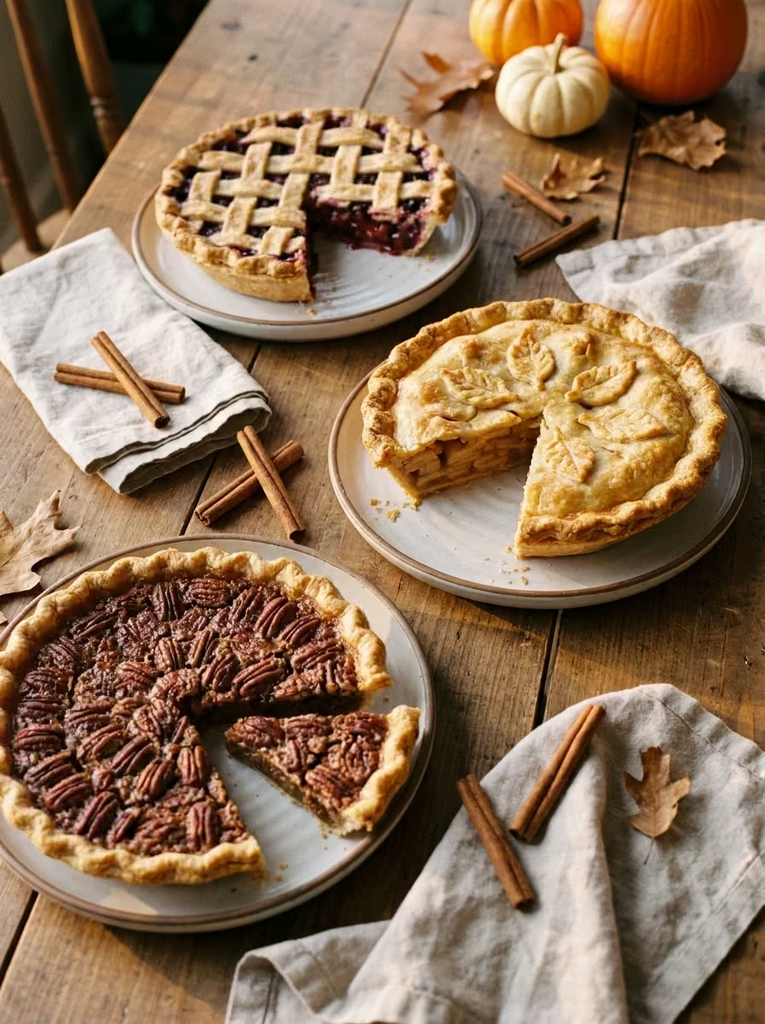
Pie dough is one of the best make-ahead recipes in baking.
- Refrigerator: Wrapped dough discs keep for up to 3 days.
- Freezer: Dough keeps for up to 3 months.
To freeze properly:
- Flatten the dough into discs and lightly flour each side.
- Wrap each disc in plastic wrap.
- Wrap again in foil.
- Place in a quart-size freezer bag and press out as much air as possible.
- Label with the date.
Thaw frozen dough overnight in the refrigerator before rolling it out.
Troubleshooting Common Pie Crust Problems
My crust is tough. The dough was likely over-mixed or had too much water. Pulse only until the dough just holds together and add water gradually.
My crust is crumbly and cracks when rolling. It may need a touch more water, or it may be too cold straight from the fridge. Let the disc sit at room temperature for 5 to 10 minutes, then try again.
My crust is sticky. The butter has warmed up. Return the dough to the fridge for 20 to 30 minutes and use a bit more flour on the surface.
My crust shrinks while baking. The dough was stretched into the dish or not chilled enough. Ease it in gently and chill the shaped crust before filling.
My bottom crust is soggy. Wet fillings can soften the base. Make sure the pie bakes fully, and consider placing the pie on the lowest oven rack so the bottom gets plenty of heat.
Homemade Pie Crust Recipe Frequently Asked Questions
Can I make Homemade Pie Crust without a food processor?
Yes. Mix the flour and salt in a large bowl, then cut in the cold butter with a pastry cutter or two forks until crumbly. Add the ice water a tablespoon at a time and stir until the dough comes together. Work quickly so the butter stays cold.
Is this a Homemade Pie Crust without shortening?
Yes. This is an all-butter recipe, so you get rich flavor without any shortening.
Can I use salted butter for Homemade Pie Crust ?
You can, but the result may taste saltier. If you do, reduce the added salt slightly. Unsalted butter gives you the most control.
How far ahead can I make Homemade Pie Crust dough?
Up to 3 days in the refrigerator, or up to 3 months in the freezer when wrapped well.
Can I use this Homemade Pie Crust for savory pies?
Absolutely. It works beautifully for chicken pot pie and other savory fillings.
How do I make just one Homemade Pie Crust ?
Halve the recipe: 1/2 cup butter, 1 1/4 cups flour, 1/2 teaspoon salt and about 3 1/2 tablespoons ice water.
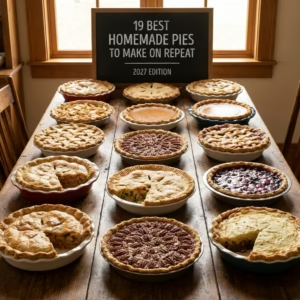
Pie Recipes to Make With This Crust
Now that your dough is ready, choose a filling. Add your own internal links to each of these
Final Thoughts
A great pie starts with a great crust, and this one proves that you do not need fancy ingredients or years of experience. With flour, cold butter, ice water and a little patience while the dough chills, you can bake flaky, golden, buttery pies that taste far better than store-bought. Make a double batch, freeze a disc for later, and you will always be one filling away from a homemade pie.
Bookmark this page, share it with a fellow baker, and come back whenever you need the foundation for your next pie.